
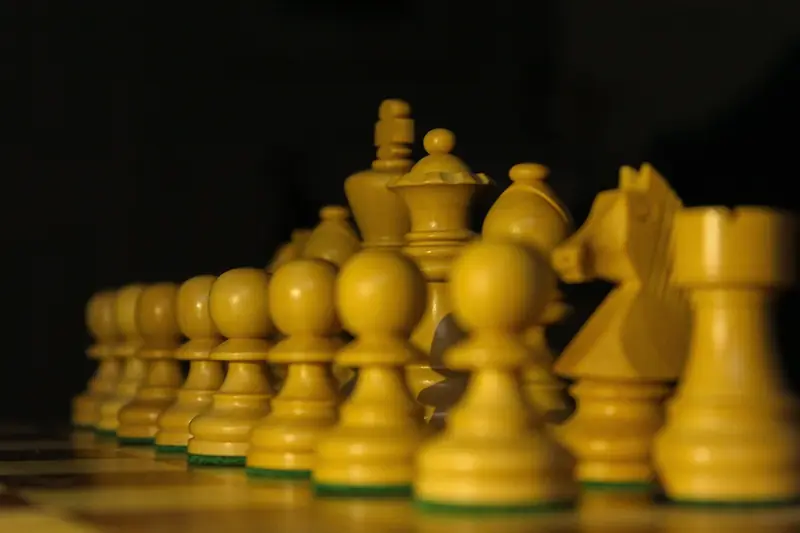
Strong players don't think in individual moves so much as in structures. The skeleton of pawns on the board defines where pieces belong, which plans make sense, and who stands better long before the position resolves. Add an understanding of when the two bishops are worth having, and you'll have a strategic compass that works in almost every middlegame.
Pawns are the soul of the position
Philidor's famous line — "pawns are the soul of chess" — is the most useful strategic idea a club player can absorb. Unlike pieces, pawns can't move backward, so every pawn move is permanent. The pawn structure therefore defines the long-term character of the position: which files are open, which squares are weak, and where each side should attack.
Before choosing a plan, read the structure. It will usually tell you what to do.
Reading the structure
A few questions unlock most middlegame plans:
- Where are the open and half-open files? Rooks belong there.
- Where are the weak squares? A square no enemy pawn can ever defend is an outpost — a perfect home for a knight.
- Which pawns are weak? Isolated, doubled, and backward pawns are targets; plan to attack them and avoid creating your own.
- Where do the pawn chains point? You generally attack in the direction your pawns point.
Common structures and their plans
| Structure | Typical plan |
|---|---|
| Isolated queen's pawn (IQP) | the IQP side attacks with active pieces; the other side blockades the pawn and trades into an endgame |
| Hanging pawns | dynamic but loose — the owner pushes for activity, the opponent pressures them |
| Minority attack | advance fewer pawns against more to create a weakness to attack |
| Pawn chains (e.g. French) | attack the base of the chain; play on the side your pawns point |
You don't need to memorise these as rules — understand the logic and the plans will feel natural in your own games.
Weak pawns and outposts
The two recurring strategic targets are weak pawns and weak squares:
- A pawn that no friendly pawn can ever defend (isolated, backward) is a long-term target. Pile pieces on it.
- A square no enemy pawn can ever attack is an outpost. A knight planted on a central outpost — say d5 or e5 — supported by a pawn, can dominate an entire position.
Half the strategic battle is creating these features in your opponent's camp while avoiding them in your own.
The bishop pair
Having both bishops while your opponent has given one up is a small but real and lasting advantage — usually reckoned at around half a pawn. Two bishops cover both colour complexes and complement each other; a lone bishop is permanently blind on one colour.
The bishop pair is most valuable when:
- The position is open, with few pawns blocking the long diagonals.
- The centre is fluid, so the bishops have scope and the enemy knights lack stable outposts.
It's worth less when the position is locked, because a well-placed knight can outshine a bishop with nothing to bite on.
Bishops versus knights
Neither minor piece is simply "better" — it depends on the structure:
- Bishops love open positions and long diagonals; they're long-range and thrive when the board opens up.
- Knights love closed positions and outposts; they're short-range but can occupy holes no bishop can be evicted from.
The practical lesson: try to make the position suit your pieces. Have the bishop pair? Open the position. Have a great knight outpost? Keep things closed and stable.
Trade with purpose
Every exchange changes the structure and the balance of pieces, so trade deliberately:
- Trade off your opponent's good pieces and your own bad ones.
- Keep the bishop pair unless you get something concrete for splitting it.
- Head toward endgames where your remaining pieces suit the structure.
A single well-judged trade can convert a murky middlegame into a clearly better ending.
Putting it together
When you reach a quiet middlegame and don't know what to do, run this checklist:
- What does the pawn structure tell me about open files and weak squares?
- Are there weak pawns or outposts to target — or to defend?
- Do I have the bishop pair? Should I open or close the position?
- Which trades improve my position, and which help my opponent?
Answer those, and a plan will almost always emerge. Strategy at the club level isn't about deep secrets — it's about reading the structure honestly and matching your pieces to it. Do that consistently and you'll outplay opponents who are only looking one move ahead.
Frequently asked questions
Pawns can't move backward, so every pawn move is permanent and defines the long-term character of the position — which files open, which squares are weak, and where each side should attack. Read the structure and it usually tells you the plan.
Yes, a small but lasting one — roughly half a pawn. Two bishops cover both colour complexes and are most valuable in open, fluid positions. They're worth less in locked positions where a knight on a good outpost can dominate.
Neither is simply better; it depends on the structure. Bishops thrive in open positions with long diagonals; knights thrive in closed positions with stable outposts. Try to make the position suit your pieces.